
A split line empties hundreds of gallons into a building in an afternoon. We isolate it, repair it, and tell you whether the rest of the run is next.
Century West is a residential neighborhood in southwest Bend, sitting just outside the gates of the Broken Top golf community.
Century West runs on mid-to-upper-tier homes with a mix of 1990s and 2000s-era plumbing. Almost all of it went in from the 1990s on, so the risks are blockages and freeze exposure, not aged-out pipe.
Call (888) 616-9423At 3,600 feet a line goes from fine to frozen overnight, not over a week
A garden hose left connected is the single most common rupture point
Crawlspace, garage and attic runs sit in unconditioned air with no protection
Long service runs on large lots freeze mid-span, where nobody thinks to look
Galvanized supply in the older core has thinned and ruptures at ordinary pressure
Vacant rentals freeze unnoticed, turning a split into a flood before anyone sees it

The streets just outside the Broken Top gates, built out through the 1990s and 2000s on modern PVC and PEX.
Get a Free EstimateFour symptoms, four different causes. The first move is the same for all of them.
| Symptom | Likely Cause | What We Do |
|---|---|---|
| No water on a freezing morning, nothing leaking yet | Line is frozen but has not ruptured, or has split and is still plugged with ice | Controlled thaw and pressure test before it releases |
| Water through a ceiling or down a wall | Split in a supply line above or inside that cavity | Isolate, open the minimum access needed, repair the section |
| Sudden pressure loss at every fixture | Rupture on the main supply run, often underground | Locate the break, excavate or access, repair or replace the run |
| Hose bib drips inside the wall after use | Frost-damaged sillcock, usually from a hose left connected | Replace with a frost-proof sillcock, pitched to drain |
| Repeated pinhole leaks in the same copper run | The run itself is failing, not a single defect | Repipe that section rather than patch it again |
Water expands as it freezes, and in a closed pipe that expansion has nowhere to go. What actually ruptures the pipe is usually not the ice itself but the pressure trapped between the ice plug and a closed fixture downstream — which is why the split often appears some distance from the frozen section.
In Bend the vulnerable spots are consistent year to year: exterior hose bibs, uninsulated crawlspace and garage runs, and the long private laterals on larger lots. A pipe against an exterior wall in an unheated space is the classic candidate, and a hose left attached over winter is the classic trigger.
This is the part that catches people out. A frozen line does not leak, because the ice is plugging it. The water arrives when it thaws — frequently the next afternoon, often while the house is empty. That is why "no water this morning" is worth a call rather than a wait.
Thawing a line under controlled conditions, with the section isolated and someone watching it come back up to pressure, is a fraction of the cost of repairing a rupture and drying out a wall cavity. If you are going to gamble on one of these, gamble on the cheap end.
The visible split is rarely the whole story. Once the section is isolated we pressure-test the run to find every failure point, because a pipe that froze hard enough to split in one place has usually been stressed along its length.
Accessible sections — exposed in a crawlspace, garage or utility area — are a straightforward cut and replace. In-wall and in-ceiling repairs cost more because opening and closing the access is most of the labour, which is why we open the minimum area that lets us do the job properly rather than the whole cavity.
A single split in otherwise sound copper or PEX is a repair. A run that has produced two or three separate failures is telling you something, and patching it a fourth time is throwing money at a pipe that has already announced its intentions.
Galvanized supply in Bend’s older core is the clearest case: once it starts splitting, the thinning is general rather than local, and section-by-section repairs will cost more over two years than repiping the run properly once. We will give you both numbers and let you decide.
Almost everything that matters here is cheap and takes an afternoon. Disconnect and drain garden hoses before the first hard freeze and shut off the interior valve feeding each hose bib if you have one. Insulate accessible runs in crawlspaces, garages and along exterior walls.
If you leave the property empty through winter, either keep it heated above freezing or have the system drained properly — setting the thermostat to 45 degrees is not the same thing as winterising.
On long private runs out on larger lots, ask us to look at where the line sits relative to the frost depth while it is still autumn.
Shut off the main. That is the whole list, and it matters more than anything else you could do. Every Bend home has one, usually at the meter near the street and often also at an interior valve on newer construction.
Then kill power to anything the water is reaching, and move what you can off the floor. Do not wait until you have found the exact source — finding it is our job, and every minute the main stays open is more water in the building.

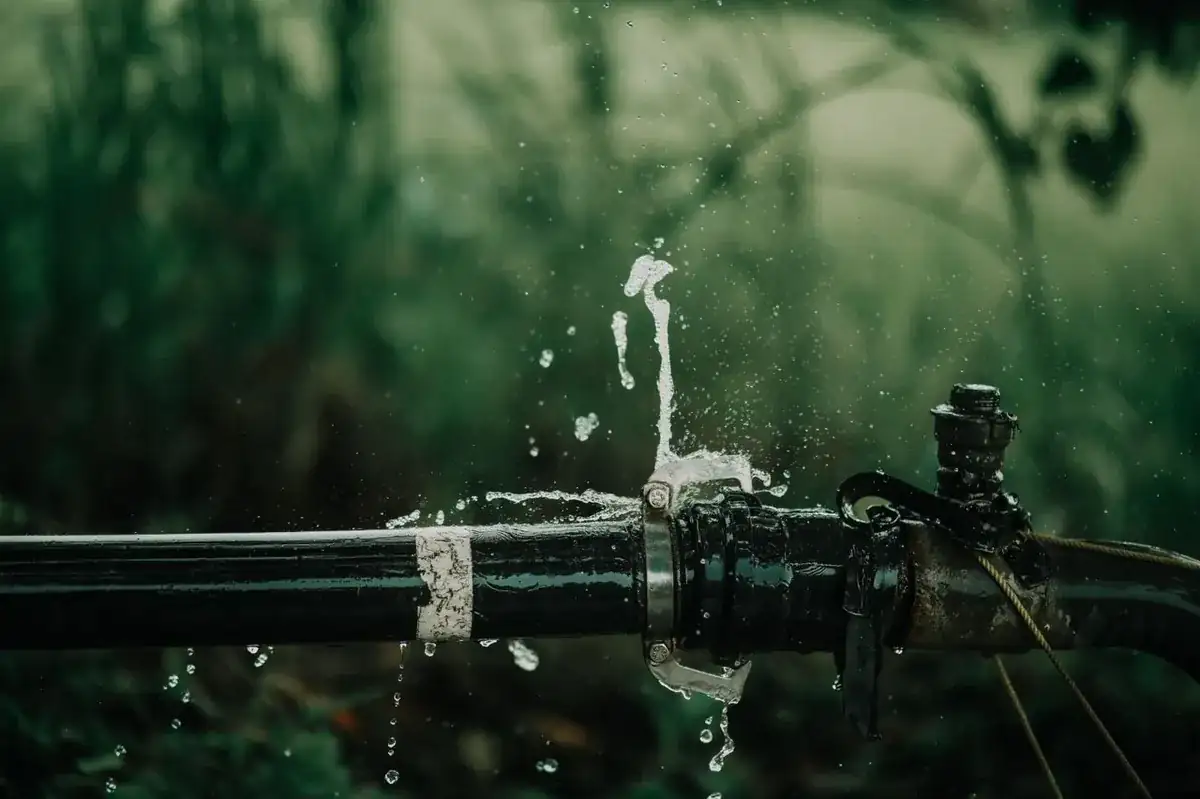
Isolate first, then locate, then open the minimum access that lets us do the repair properly. Every repaired run gets pressure-tested before we close anything back up, because a pipe that split once has usually been stressed along its whole length.
Call (888) 616-9423General Bend-area ranges for budgeting. Your on-site estimate is free and specific to the job.
| Service | Typical Range |
|---|---|
| Frozen line thaw, no rupture | $150 – $450 |
| Accessible pipe section repair | $350 – $900 |
| In-wall or in-ceiling repair, including access | $600 – $1,800 |
| Frost-proof hose bib / sillcock replacement | $200 – $500 |
| Repipe of a failed supply run | $1,000 – $4,000 |
| Emergency / after-hours surcharge | +$75 – $200 |
Ranges shown are typical Bend-area market pricing for reference only, not a quote. Every job gets a free, upfront estimate before we start.
Yes. Century West is part of our standard Bend service area, including the streets around Broken Top and Widgi Creek. Same crew and the same equipment as anywhere else in the city, with same-day availability on most calls — call (888) 616-9423 to confirm a time.
Call while it is still frozen — that is the cheap window. Leave affected taps cracked open so any melt has somewhere to go, and do not use an open flame to thaw anything. A controlled thaw with the section isolated costs a fraction of repairing a rupture you discover after it has already emptied into a wall.
Exterior hose bibs (especially with a hose left connected), uninsulated crawlspace and garage runs, pipes against exterior walls in unconditioned space, and the long private service runs on larger west- and south-side lots. Galvanized supply in the older core around Downtown, Old Bend and the Orchard District is its own category.
Enough that the main shutoff matters more than anything else you can do. A split supply line under normal household pressure runs continuously until something stops it, which is why we ask you to close the main before looking for the source.
A single failure in otherwise sound copper or PEX is a repair. Two or three failures on the same run, or any split in aging galvanized, is a repipe conversation — we will price both so the comparison is in front of you.
That is between you and your insurer and depends on your policy and the cause, so we will not tell you what it will or will not pay. What we can do is document what failed and why, with photos, which is what an adjuster will ask for.
An accessible section is often done in a single visit of a couple of hours. In-wall and in-ceiling work takes longer because opening and closing the access is most of the labour, and we pressure-test before closing anything back up.
Disconnect garden hoses before the first hard freeze, insulate accessible runs in unconditioned spaces, and either heat or properly drain a property you leave empty through winter. Most repeat failures we see are the same hose bib, the same crawlspace run, the second year running.
If it drips inside the wall after you shut it off, yes — that is usually a frost-damaged sillcock, and it is soaking framing you cannot see. Replacing it with a frost-proof unit pitched to drain is a small job compared to what the water does over a season.
Same-day availability, a free estimate before any work, and a real diagnosis before anyone recommends a repair.
(888) 616-9423 Request a Free Estimate